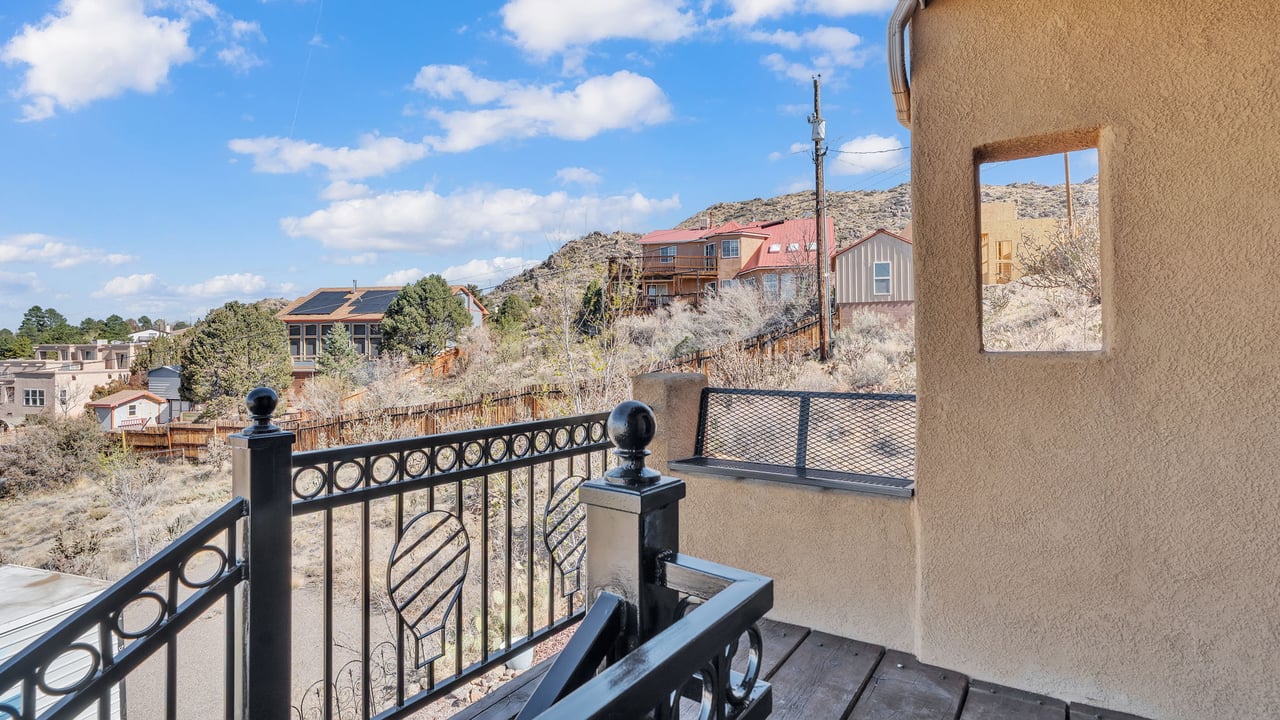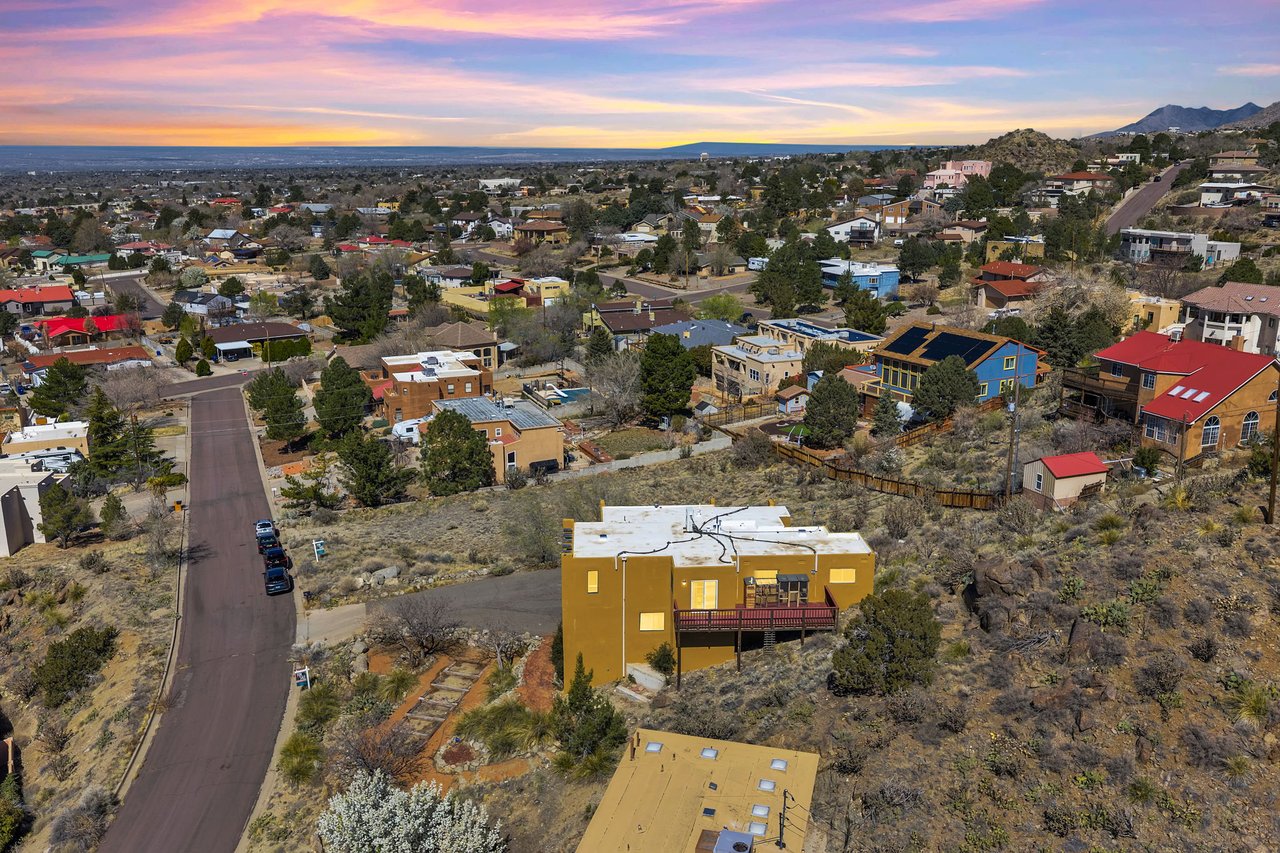
Tucked into the southeastern edge of the city, Four Hills feels a little removed from the pace of Albuquerque in the best possible way. It’s the kind of neighborhood where the landscape does a lot of the talking, where the Sandia foothills rise just beyond your backyard, and the views stretch out in a way that makes the city feel both close and far at the same time.
There’s a quietness here that’s hard to replicate, not in a sleepy sense, but in a way that feels intentional. Streets wind a bit more. Homes sit a little farther apart. And everything about it feels designed to take advantage of the setting rather than compete with it.
A Community Built Around the Landscape
Four Hills really began to take shape in the 1960s, during a time when Albuquerque was expanding outward, and people were starting to look for more space, more privacy, and a closer connection to the natural surroundings. Instead of the tighter grid you’ll find in older parts of the city, this area was developed with a different mindset, one that followed the terrain rather than flattening it.
That influence is still obvious today. The layout feels organic, with curved streets and homes positioned to capture views of the Sandias, the city lights, or both. It’s one of those neighborhoods where no two streets feel exactly the same, and that variety adds to the overall sense of character.
At the heart of the area is the Four Hills Country Club, which has been a central part of the community for decades. Even if you’re not a golfer, it helps shape the feel of the neighborhood, green space, open views, and a kind of built-in sense of calm that carries throughout the area.
Architecture That Reflects the Era, With Room to Evolve
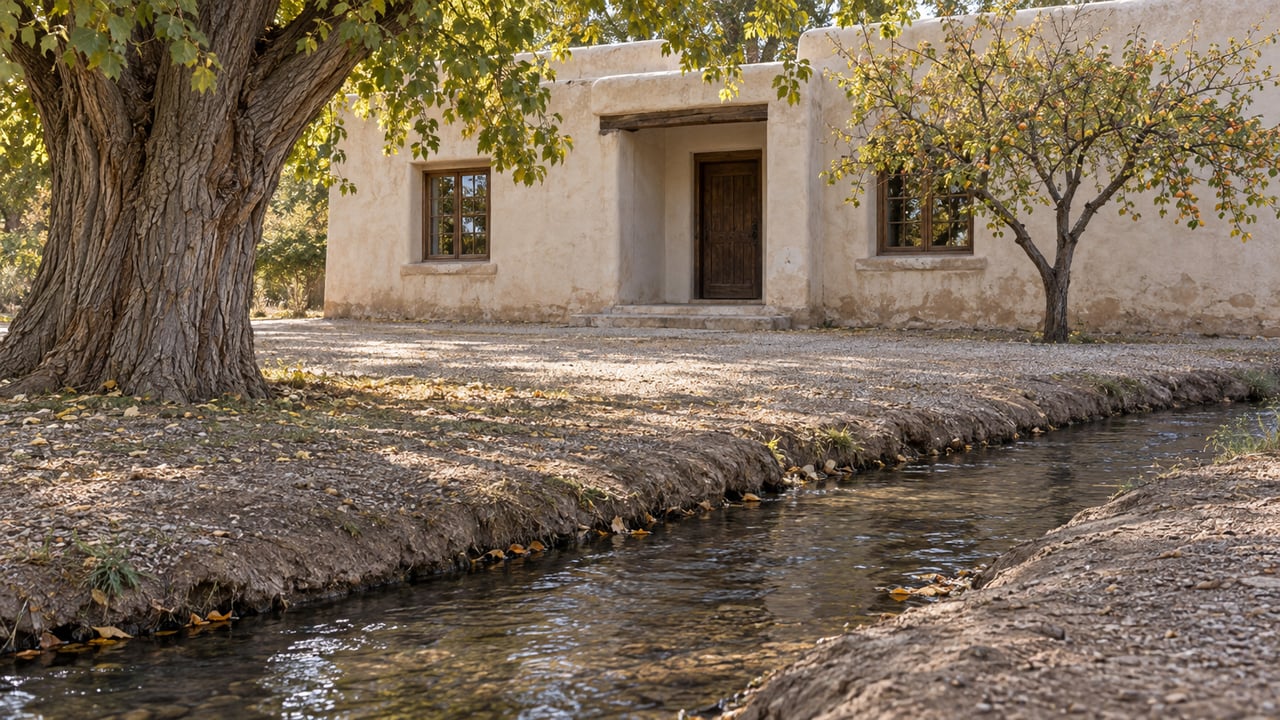
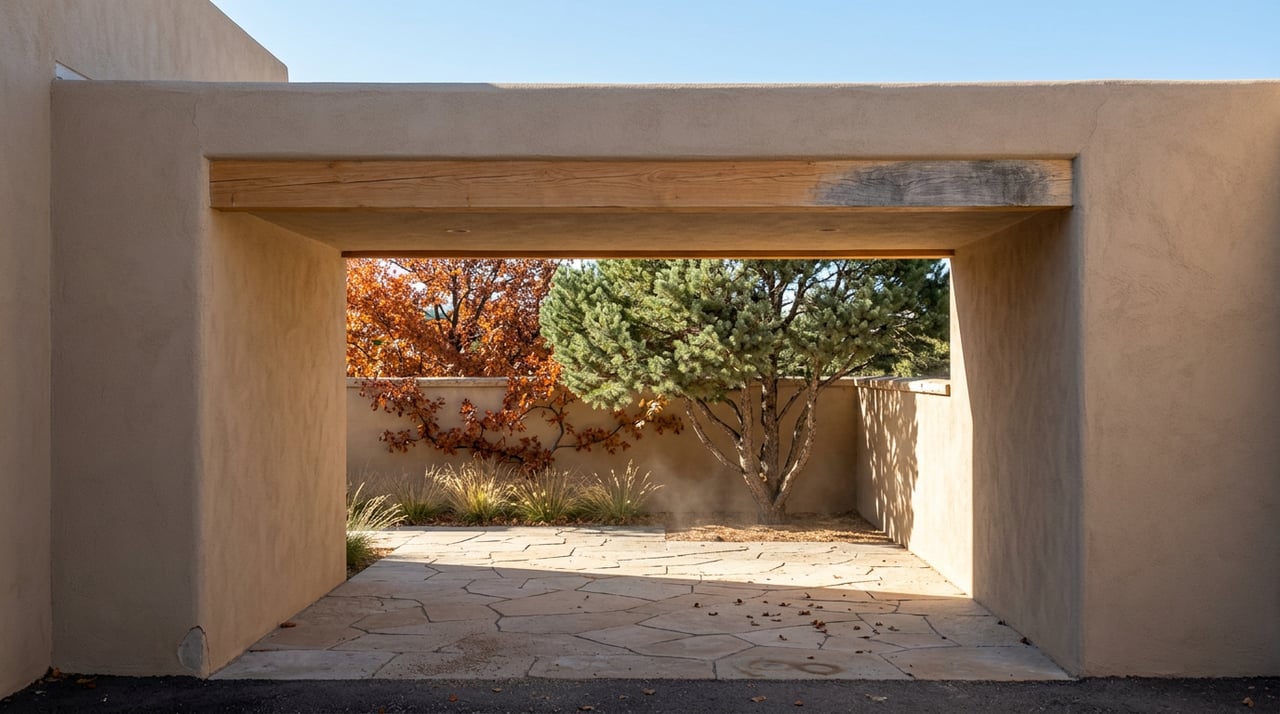
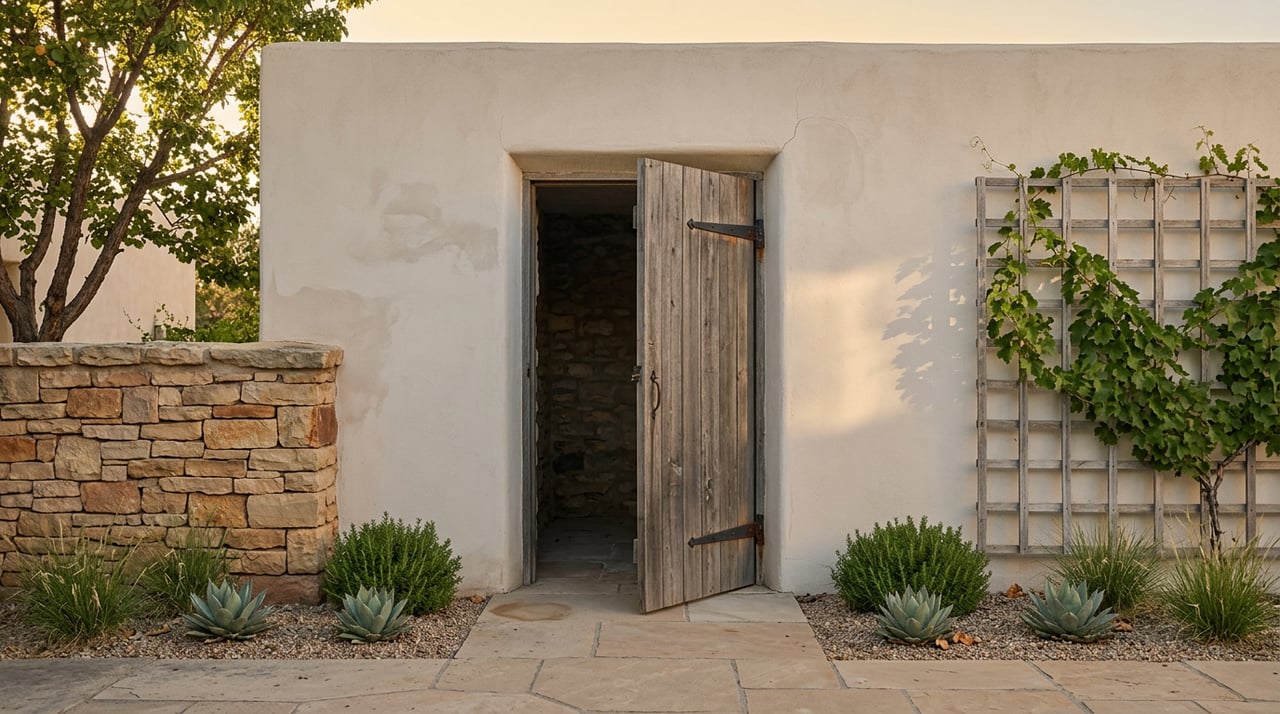
One of the more interesting aspects of Four Hills is the architecture, because much of the neighborhood was developed in the mid-to-late 20th century, you’ll find a mix of styles that reflect that period, ranch homes, pueblo-inspired designs, and some mid-century elements that feel especially fitting against the desert backdrop.
What makes it feel current, though, is how many of these homes have been thoughtfully updated over time. You’ll see renovations that open up floor plans, bring in more natural light, and blend indoor and outdoor living in a way that feels very aligned with how people want to live now.
At the same time, there’s still a strong sense of individuality. Homes aren’t overly uniform, and lot sizes tend to be more generous, which gives the neighborhood a more relaxed, less condensed feel. It’s not trying to be perfectly curated; it’s comfortable with a little variation, and that works in its favor.
A Different Kind of Albuquerque Lifestyle
Living in Four Hills offers a different pace compared to more central neighborhoods. It’s quieter, a bit more removed, and more focused on the immediate surroundings. Morning walks feel a little more scenic, especially with easy access to trails right along the foothills. Trailheads off Four Hills Road and nearby access points along Tramway connect directly into Cibola National Forest, making it easy to get out into the landscape without having to plan your whole day around it.
Closer to home, Four Hills Park offers a more neighborhood-centered feel, open green space, walking paths, and a place where people naturally gather without it feeling crowded. It’s the kind of park that feels like an extension of the neighborhood rather than a destination, which adds to that balance Four Hills does so well: access to nature, but still a strong sense of community.
Evenings tend to wind down with views of the mountains or the city lights rather than traffic and noise, and during the holidays, the neighborhood takes on a completely different kind of energy. For years, Four Hills has been one of those under-the-radar spots locals know for driving through to see Christmas lights. Homes lean into it in a way that feels festive and classic, and the winding streets make it feel a little more immersive, less like a display, more like a tradition.
At the same time, you’re not disconnected. One of the more underrated aspects of Four Hills is how accessible it still is; you’re typically about 10–15 minutes from downtown Albuquerque, with quick access to I-40, and an easy commute to places like Kirtland Air Force Base and Sandia National Laboratories. It’s that balance that really defines the lifestyle here; you can step into nature in minutes, but you’re never too far from the rest of the city when you need it.
Why Four Hills Stands Out
In a city with a wide range of neighborhoods, Four Hills occupies a unique space. It doesn’t have the historic density of older areas or the fast-paced energy of newer developments. Instead, it offers something quieter and more grounded in its setting.
It’s a neighborhood shaped as much by the land as by the homes built on it, and because of that, it has a kind of consistency that doesn’t rely on trends. The views aren’t going anywhere. The foothills will always be right there, and the sense of space, the thing that draws people in the first place, remains one of its strongest defining features. That’s exactly what makes it feel like home.
- City of Albuquerque – Community & Planning Information
-
University of New Mexico – Regional Development Archives
-
Four Hills Neighborhood Association