Long before Albuquerque became the city we know today, it was a quiet settlement along the Rio Grande. What changed everything wasn’t a highway or a housing boom; it was the railroad. Even now, more than a century later, pieces of that railroad era are still embedded in the city itself. Sometimes, quite literally, in the bricks beneath people’s feet.
The Railroad That Built a City
When the Atchison, Topeka, and Santa Fe Railway arrived in 1880, Albuquerque changed almost overnight. Instead of expanding outward from Old Town, the city essentially split in two. A brand-new district, “New Town” formed around the tracks, about a mile and a half east. That area would eventually become modern-day Downtown Albuquerque.
The railroad didn’t just bring transportation; it brought everything:
-
Jobs (at one point employing nearly a quarter of the city’s workforce)
-
New residents from across the country and the world
-
Materials, goods, and building supplies that shaped how the city looked
In many ways, Albuquerque didn’t grow around the railroad; the railroad created the version of Albuquerque we know today.
Building a City Out of Brick and Industry
As “New Town” developed, the early makeshift wooden buildings quickly gave way to something more permanent: brick. Downtown streets filled with brick hotels, storefronts, and homes, many built just a block or two off what was then called Railroad Avenue (now Central Avenue).
The rail yards themselves, massive industrial complexes built between the 1910s and 1920s, were constructed using brick, stone, timber, and later reinforced concrete. These weren’t just buildings. They were the physical backbone of the city’s economy. Over time, as structures were demolished, updated, or repurposed… those materials didn’t disappear. They got reused.
Where the Railroad Still Shows Up Today
One of the most interesting and often overlooked parts of Albuquerque’s history is how much of the railroad era still exists in everyday spaces. In neighborhoods surrounding Downtown Albuquerque, especially areas that developed between the late 1800s and early 1900s, you can still find original or reclaimed brick in:
-
Backyard patios
-
Garden walls
-
Walkways and driveways
-
Foundations of older homes
As older railroad-era buildings were torn down or renovated, it was common for materials like brick to be salvaged and reused locally. In a time before mass-produced construction materials were cheap and widely available, nothing went to waste.
So those worn, slightly irregular bricks you see in a patio or side yard? There’s a good chance they once belonged to:
-
A rail yard structure
-
A downtown storefront
-
Or even housing built for railroad workers
It’s a subtle connection, but a real one.
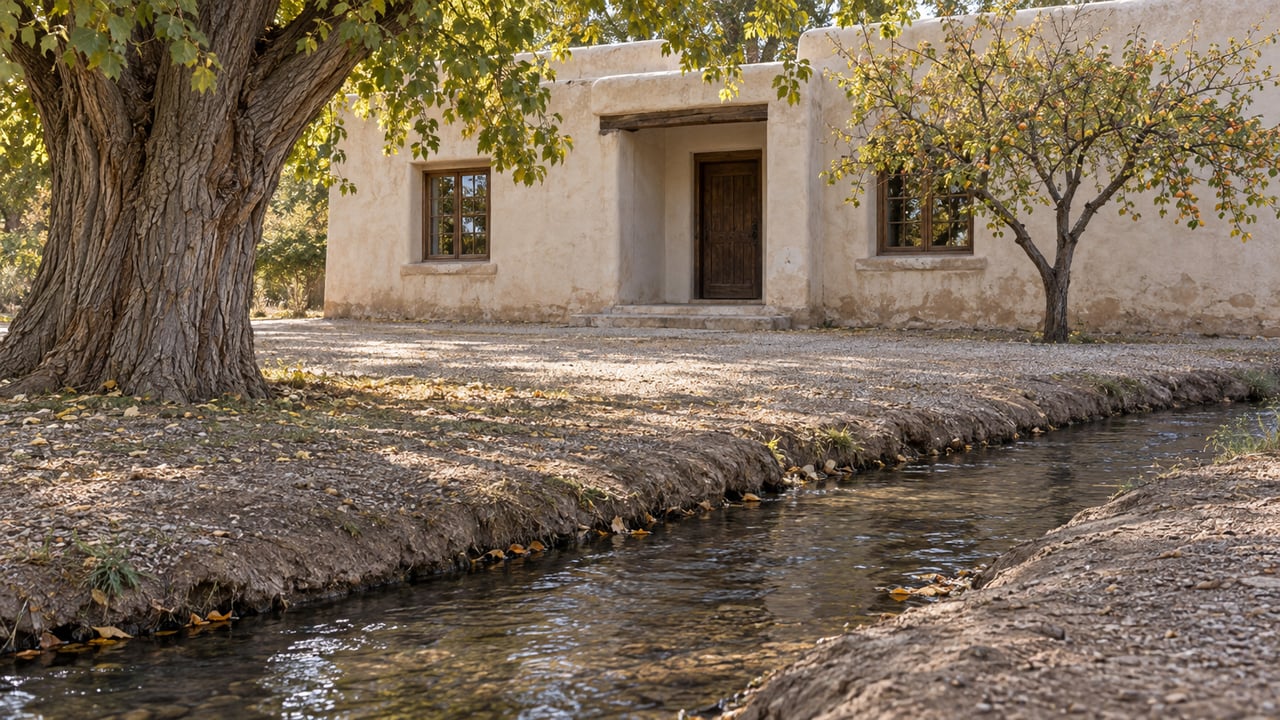
In neighborhoods like Barelas, just south of downtown, this connection is even more direct. Railroad workers lived there, and the mix of adobe and brick homes still reflects that era of transition and growth. You can still see the contrast between older adobe structures and later brick homes built as new materials became available through the railroad itself.
Further east, neighborhoods like the Ridgecrest neighborhood in Albuquerque developed later, in the 1920s and beyond. By that time, Albuquerque had already been transformed by the railroad. Materials, especially brick, were easier to transport and more widely used across the city.
While Ridgecrest isn’t a railroad neighborhood in the same way Barelas is, you can still find:
-
Reclaimed brick in landscaping and patios
-
Early 20th-century construction styles influenced by railroad-era growth
-
Homes built during a time when Albuquerque was expanding outward from its rail-centered core
In many cases, homeowners over the decades reused older materials from downtown or nearby demolitions, quietly carrying pieces of the railroad era into newer neighborhoods.
The Rail Yards: The Center of It All
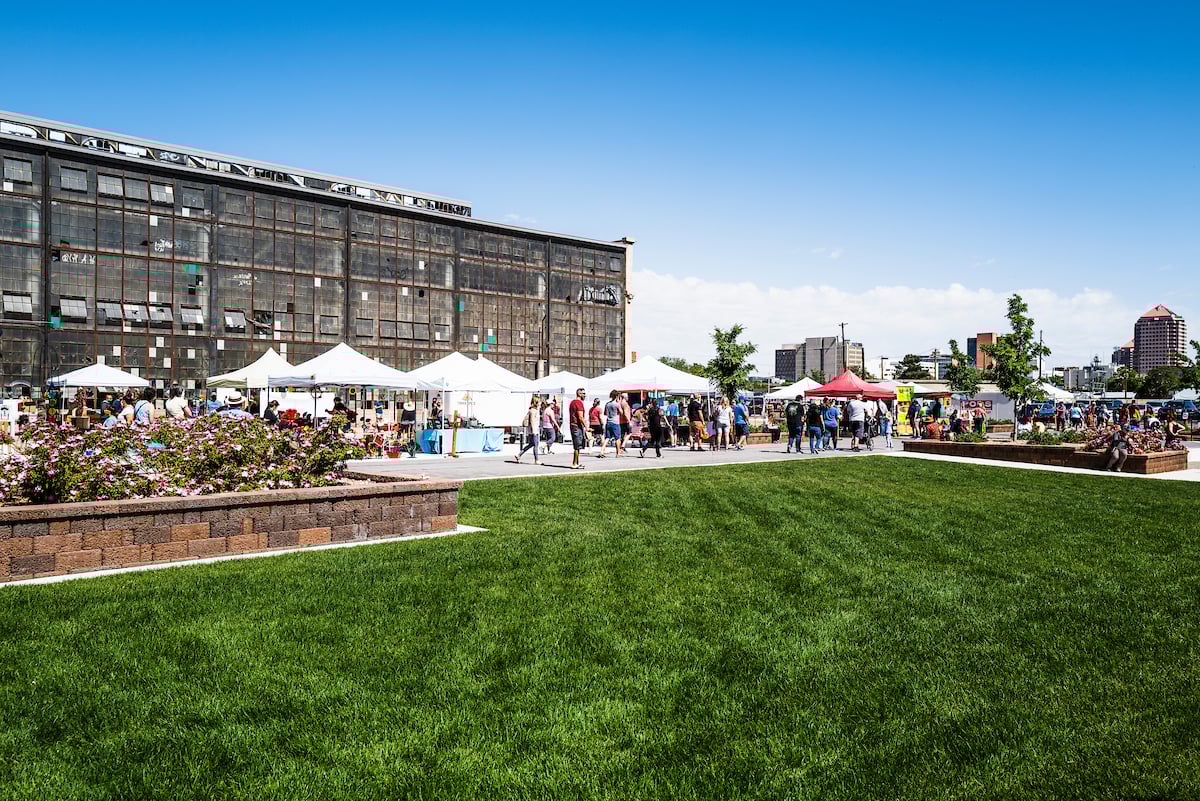
At the center of this story are the Albuquerque Rail Yards. Built in the early 20th century, the Albuquerque Rail Yards were once one of the largest employers in the city and a hub of constant activity, steam, metal, noise, and movement. Entire neighborhoods existed because of them. As technology shifted from steam to diesel, the yards gradually declined. The energy faded, but the massive structures, and the history, remained.
A New Chapter: The Rail Yards Revitalized
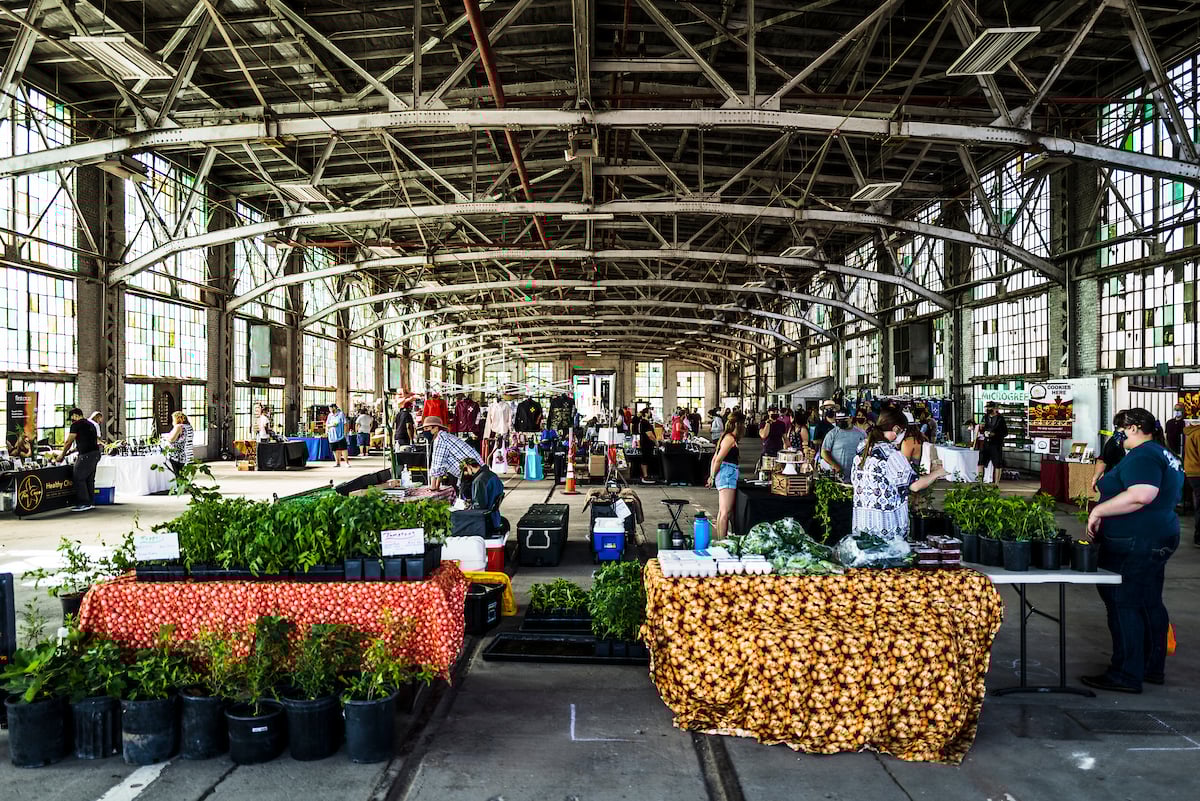
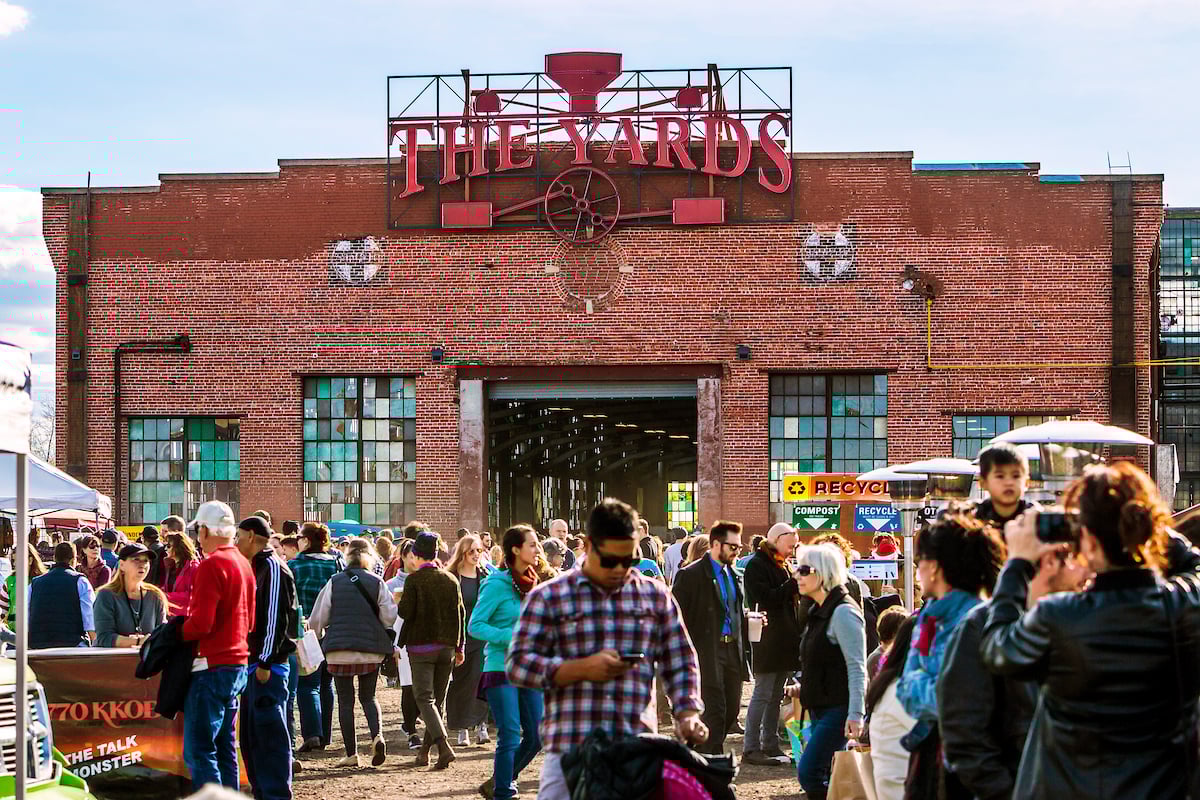
Today, the Albuquerque Rail Yards have taken on new life as a community gathering space, most notably through the Rail Yards Market. What was once industrial space is now filled with local farmers, potters, florists, bakers, and artists. The same buildings that once supported Albuquerque’s workforce now provide an expansive and beautiful place for local creatives to sell their goods.
For visitors, it’s one of the best places in the city to shop local and experience Albuquerque’s culture in a meaningful way. It’s not just a market, it’s a continuation of the rail yards’ original purpose: bringing people together and supporting the local economy, just in a new form.
The railroad didn’t just shape Albuquerque’s economy; it shaped its neighborhoods, its architecture, and even the materials that still exist in homes today, so the next time you see an old brick patio or wall, especially near downtown or in older neighborhoods, it’s worth taking a second look, because there’s a real chance you’re looking at a piece of Albuquerque’s railroad past, still quietly holding its place in the present.
Atchison, Topeka and Santa Fe Railway. Historical influence on Albuquerque’s founding and expansion.
Albuquerque Rail Yards. Industrial and economic history.
City of Albuquerque. Rail Yards History & Redevelopment Information.
Wheels Museum. Railroad workforce and industrial context.
Albuquerque Historical Society. Neighborhood development and material reuse context.
Barelas. Worker housing and railroad-era community development.
Downtown Albuquerque. Early railroad-centered development.